Introducing Interpreter — Real-time translation for customer appointments → See how!

What changes when the admin stops competing for the adviser's attention

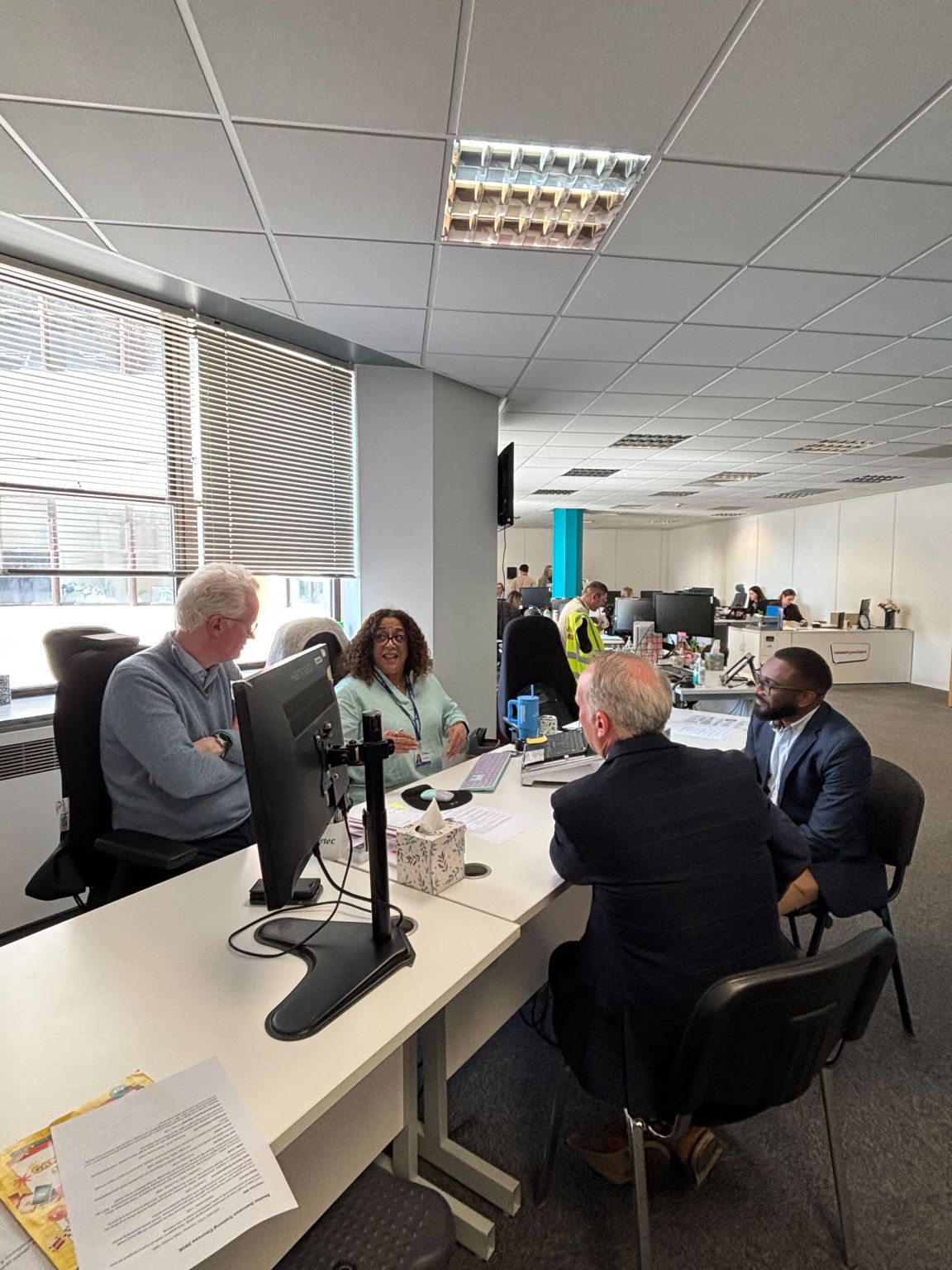
Earlier this month my co-founder Boris sat in on an adviser session at one of the providers we work with. Partway through the hour, the adviser pushed their laptop to the side of the desk. The screen stayed open and Earlybird was running in the background capturing the conversation and logging the action items, and the adviser did not need to look at it. They sat with the person in front of them and ran the session without touching a keyboard.

Boris brought the observation back to me that evening. I have been thinking about it since.

The quiet thing admin has been doing to casework

The admin load on frontline advisers has been creeping up for years through small additions. Stacked up over time, they have moved the laptop to the centre of the desk.

The part of the work that actually changes a customer outcome happens in the conversation itself. It lives in the careful listening and in the moments where an adviser notices the thing that has not been said out loud. That part of the work has been getting squeezed into the gaps between the admin.

We have been framing this as a productivity problem and the hours do matter. The deeper issue is a quality-of-practice one. When the adviser is looking at the screen, the customer can tell.

What we are seeing change

We know the Earlybird platform saves and recovers hours, the dashboard shows that, and the numbers hold up month after month. I am looking forward to sharing the detailed case study work on this over the coming weeks.

The part I find myself thinking about more, when I speak to teams who have been on the platform for a year or more, is what they have started doing with the hours once they have them.

I am seeing teams push their recovered time back into work they could not fit in before. Advisers are using the time to approach local employers themselves and build the relationships that find fulfilling roles for the customers they support. Teams are running longer one-on-one sessions with their customers, because the admin pressure that used to eat the edges of the day has lifted.

The other pattern worth naming is in how CVs and cover letters are being produced. Earlybird generates both in the session itself, built from what the adviser and the customer have just talked about. That frees the adviser to spend their time on the finishing touches that make the documents actually land with an employer, which is the part of the CV and cover letter work most advisers would rather be doing anyway.

These are the measures that matter. Hours recovered is the headline dashboard metric and it is worth paying attention to, and the measure that tells you whether things have actually changed for the people being supported is what the team chooses to do with those recovered hours.

The reallocation question

On the Futurise podcast earlier this year I was asked how we think about our own product. I answered like this.

"We doubled down on the time-saving piece, and not from a perspective of saving time just for the sake of saving time, but how you can benefit from being able to reallocate that time to other things."

That framing is how we think about the platform. Workscribe captures the session as it unfolds. Conversations run the structured intake and check-in flows across the caseload, and Interpreter handles live translation in more than 90 languages where the customer needs it. All of this sits in the background of the session and writes notes and action items back into the systems the provider already uses, so the adviser can spend the time doing the part of the job that cannot be delegated.

The reallocation question is the one most teams evaluating AI for frontline casework are not yet asking. The first question is usually some version of how much time will this save. It is a fair question to ask.

The question that deserves to sit ahead of it is what we will do with the hours once we have them. Because if a team cannot answer that, the hours will be absorbed back into the admin that rushes in to fill them, and the platform will have saved time that nobody can point to.

What the laptop actually means

Boris came back from that session with an image that has stayed with me more than any single metric would have. An adviser pushing a laptop to the side of the desk, because they did not need it in their hand to do their job properly.

That is the measure I care about most. The screen is there, the session is being captured in the background, and the notes and action items are logging themselves as the conversation unfolds, while the adviser keeps their attention on the person in front of them.

That is what the platform is built to do. The time shown on the dashboard is the evidence of it working, rather than the goal in itself. The platform has been built privacy-first from the outset, with ISO 27001 and Cyber Essentials Plus certification and UK data residency, which is the other reason providers are comfortable with Earlybird running in the background of an adviser session in the first place.

If you are evaluating AI tooling for your frontline teams and you want to see what the platform looks like in practice, you can book a demo of Earlybird here.

Author: Claudine Adeyemi-Adams FIEP

What changes when the admin stops competing for the adviser's attention

What changes when the admin stops competing for the adviser's attention

Published On:

28/4/2026

Earlier this month my co-founder Boris sat in on an adviser session at one of the providers we work with. Partway through the hour, the adviser pushed their laptop to the side of the desk. The screen stayed open and Earlybird was running in the background capturing the conversation and logging the action items, and the adviser did not need to look at it. They sat with the person in front of them and ran the session without touching a keyboard.

Boris brought the observation back to me that evening. I have been thinking about it since.

The quiet thing admin has been doing to casework

The admin load on frontline advisers has been creeping up for years through small additions. Stacked up over time, they have moved the laptop to the centre of the desk.

The part of the work that actually changes a customer outcome happens in the conversation itself. It lives in the careful listening and in the moments where an adviser notices the thing that has not been said out loud. That part of the work has been getting squeezed into the gaps between the admin.

We have been framing this as a productivity problem and the hours do matter. The deeper issue is a quality-of-practice one. When the adviser is looking at the screen, the customer can tell.

What we are seeing change

We know the Earlybird platform saves and recovers hours, the dashboard shows that, and the numbers hold up month after month. I am looking forward to sharing the detailed case study work on this over the coming weeks.

The part I find myself thinking about more, when I speak to teams who have been on the platform for a year or more, is what they have started doing with the hours once they have them.

I am seeing teams push their recovered time back into work they could not fit in before. Advisers are using the time to approach local employers themselves and build the relationships that find fulfilling roles for the customers they support. Teams are running longer one-on-one sessions with their customers, because the admin pressure that used to eat the edges of the day has lifted.

The other pattern worth naming is in how CVs and cover letters are being produced. Earlybird generates both in the session itself, built from what the adviser and the customer have just talked about. That frees the adviser to spend their time on the finishing touches that make the documents actually land with an employer, which is the part of the CV and cover letter work most advisers would rather be doing anyway.

These are the measures that matter. Hours recovered is the headline dashboard metric and it is worth paying attention to, and the measure that tells you whether things have actually changed for the people being supported is what the team chooses to do with those recovered hours.

The reallocation question

On the Futurise podcast earlier this year I was asked how we think about our own product. I answered like this.

"We doubled down on the time-saving piece, and not from a perspective of saving time just for the sake of saving time, but how you can benefit from being able to reallocate that time to other things."

That framing is how we think about the platform. Workscribe captures the session as it unfolds. Conversations run the structured intake and check-in flows across the caseload, and Interpreter handles live translation in more than 90 languages where the customer needs it. All of this sits in the background of the session and writes notes and action items back into the systems the provider already uses, so the adviser can spend the time doing the part of the job that cannot be delegated.

The reallocation question is the one most teams evaluating AI for frontline casework are not yet asking. The first question is usually some version of how much time will this save. It is a fair question to ask.

The question that deserves to sit ahead of it is what we will do with the hours once we have them. Because if a team cannot answer that, the hours will be absorbed back into the admin that rushes in to fill them, and the platform will have saved time that nobody can point to.

What the laptop actually means

Boris came back from that session with an image that has stayed with me more than any single metric would have. An adviser pushing a laptop to the side of the desk, because they did not need it in their hand to do their job properly.

That is the measure I care about most. The screen is there, the session is being captured in the background, and the notes and action items are logging themselves as the conversation unfolds, while the adviser keeps their attention on the person in front of them.

That is what the platform is built to do. The time shown on the dashboard is the evidence of it working, rather than the goal in itself. The platform has been built privacy-first from the outset, with ISO 27001 and Cyber Essentials Plus certification and UK data residency, which is the other reason providers are comfortable with Earlybird running in the background of an adviser session in the first place.

If you are evaluating AI tooling for your frontline teams and you want to see what the platform looks like in practice, you can book a demo of Earlybird here.

Author: Claudine Adeyemi-Adams FIEP

At Earlybird, we believe in a future where every worker is given the opportunity to shine. Join us in our journey to make this vision a reality. Sign up for our newsletter to receive exclusive insights, success stories, and updates on how Earlybird is transforming the industry

Thank you! Your submission has been received!
Oops! Something went wrong while submitting the form.

The information provided on this website is for general informational purposes only.